On this page you will find our 12 central issues and the demands I will fight for in the Abgeordnetenhaus (Berlin’s state parliament). Is something important missing? Write to me and let me know what you think.
(Tap a demand to find out more)
Stop the rent madness
Housing is a right — not an object of speculation. In Gropiusstadt the opposite has been the reality for years.
Walter Gropius once planned the future here: around 18,500 flats, 90 % of them social housing, affordable for everyone. But in the 1990s the Senate sold off the municipal housing company on the cheap. Today whole streets belong to corporations such as Deutsche Wohnen and Vonovia. In just five years around 20,000 social housing flats have fallen out of rent control, and under the black-red coalition rents rose by up to 11 % in almost every state-owned flat.
Berliners decided long ago: in the Volksentscheid (public referendum) a clear majority voted to expropriate Deutsche Wohnen & Co. Yet the black-red coalition passed a toothless framework law and has not socialised a single flat — and now the Merz federal government is bolting the door on expropriation by law as well. That is an attack on the democratic will of the people here. They are actively obstructing us so that Vonovia and Deutsche Wohnen can guarantee their investors even more security — so that our homes stay an object of speculation for their profits.
We will not put up with that. In concrete terms, I am fighting for:
The Volksentscheid has been won and the legal questions are settled. DIE LINKE is the only party that will act on it without compromise: a socialisation law in the first year of government — against every delaying manoeuvre by the black-red CDU/SPD coalition and the blockade by the Merz government at federal level.
A rent freeze in the first 100 days for the roughly 400,000 flats owned by the state of Berlin, and a maximum increase of 1 % a year after that. Excessive rents will be brought back down and rent profiteering tackled head-on — with a new state office for tenant protection that really has teeth.
Two billion euros a year for 7,500 new council flats, permanently affordable at between 6 and 12 euros and open to two thirds of all households. Plus an action programme for large estates like ours: refurbishment without rent rises, more green space, better lighting.
Good schools, strong young people
After many years as a private tutor I know: in Germany, success in education still depends far too much on what parents can afford.
For ten years I gave private tuition to children and young people, and every day I saw how much is possible when someone believes in a child — and how quickly chances are lost when nobody is there. While the black-red coalition takes the red pen to schools, youth services and universities, the next generation is growing up in exactly those places. That is not fate, it is a political decision about who gets invested in.
That is why I am fighting in the Abgeordnetenhaus for:
An investment programme to clear the repairs backlog instead of the red pen on education: refurbished schools, enough staff and reliable all-day provision. Broken toilets and cancelled lessons are not acceptable in a rich city.
Free learning support for every child, keeping the free school travel pass, and BAföG (state student support) paid independently of parents’ income. Education must never founder on what is in a family’s bank account — I know the consequences of that far too well.
They are the foundation of a liveable Kiez (neighbourhood) and often the only refuge many young people have. With regularly checked safety standards and educational provision we create spaces in which young people can flourish. Reliably funded, instead of sacrificed to an austerity budget.
Fighting poverty in our Kiez
of children in Gropiusstadt grow up in families that depend on Grundsicherung (basic welfare support) — more than one child in three.
This figure is not about strangers. It is about families from our street, children from our nursery, our school. Poverty here is not individual failure — it is the result of a politics that looked away for too long and then made cuts on top. DIE LINKE does the opposite: concrete help that arrives in everyday life.
From my daily work on constituents’ casework and in our social advice surgeries I know how much it matters when someone looks after ordinary people outside parliament as well. That is what good politics is — and that is exactly how I do politics.
That is why I am campaigning for:
Healthy meals from 3 euros right here in the Kiez — against poverty and loneliness at the same time. And free lunches at every school and nursery, so that no child has to learn on an empty stomach.
The black-red coalition made the Sozialticket (reduced-price transport pass) more expensive. We will bring it back down to 9 euros and push the Kindergrundsicherung (basic income guarantee for children) forward through the Bundesrat (the chamber of Germany’s federal states) — mobility and a decent life must not depend on the size of your wallet.
Bring the official benchmarks for housing costs into line with real rents, and strengthen the neighbourhood work that knows the Kiez and reaches families before a difficult situation becomes a hopeless one.
Against racism and fascism — not one inch
Neukölln is colourful and diverse — and at the same time it knows everyday racism and far-right terror at close quarters.
Racism hits many people in Neukölln every single day — migrant, Black, Jewish, Muslim and many other communities. It shows itself not only in individual prejudice, but in structural disadvantage: when looking for a flat or a job, in the education system and at the hands of public authorities. Migrant-run businesses such as shisha bars or baklava bakeries are placed under blanket suspicion and hit with raids. That is not a fringe phenomenon: it plays people off against one another and hides social inequality.
At the same time, Neukölln knows far-right terror at close quarters: more than 70 offences between 2009 and 2021 are attributed to the so-called Neukölln-Komplex — arson attacks, threats and criminal damage, mostly against people who campaign against the far right or are read as migrant. In 2026 the parliamentary inquiry found serious failings on the part of the police and the judiciary — and yet to this day nobody has really been held to account.
That is why I am fighting in the Abgeordnetenhaus for:
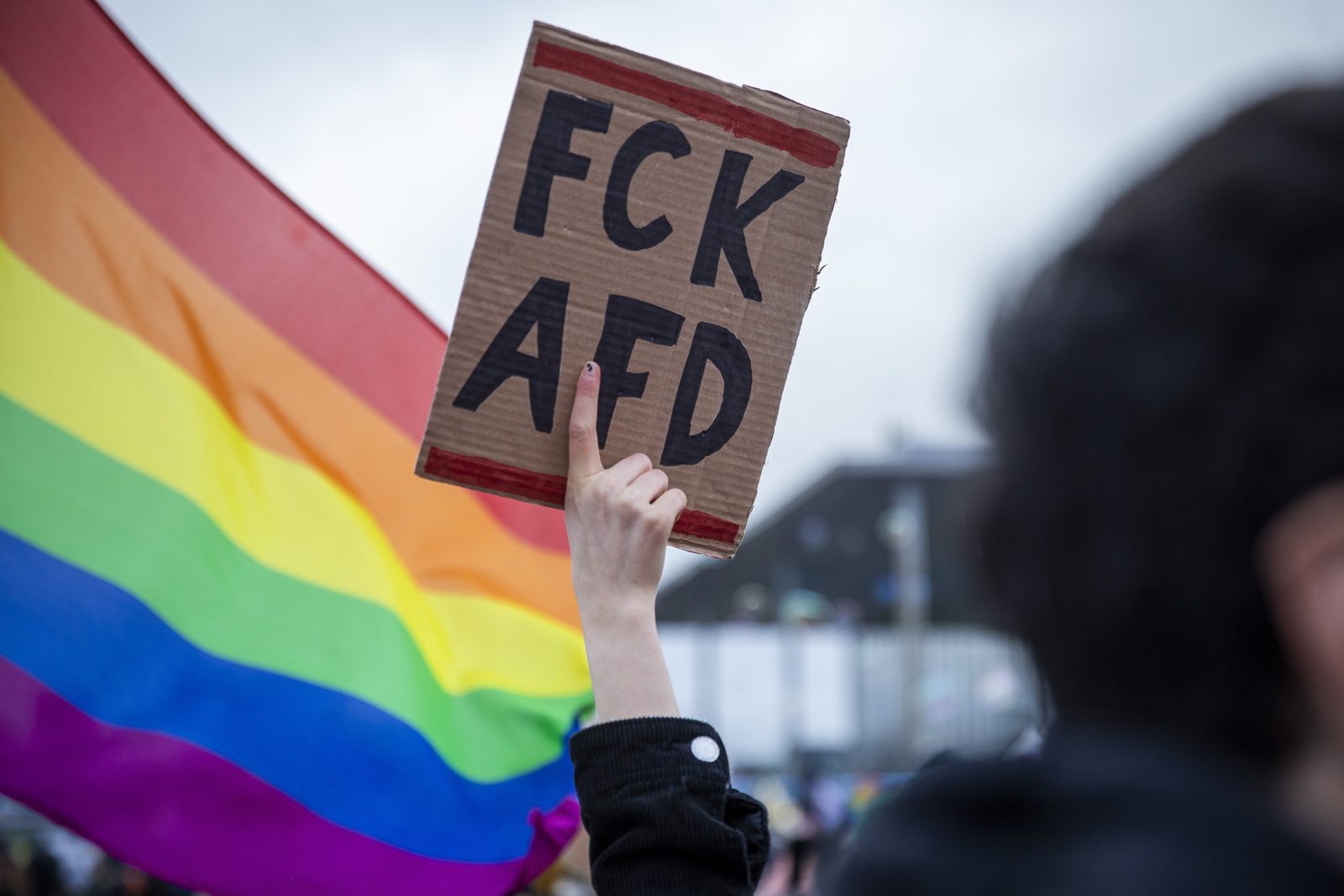
Everyone who lives here should be able to live without fear — whatever their background, religion or skin colour. I stand against the AfD’s racist, dehumanising agitation with every ounce of determination, in the Abgeordnetenhaus and in the Kiez. Anyone who makes hatred respectable will find resolute resistance in me.
Racism often sits in structures, not only in people’s heads. I am committed to confronting racist structures within the police — against racial profiling, discriminatory raids and the repression of peaceful protest. And Berlin’s Landesantidiskriminierungsgesetz (state anti-discrimination act) must stay, and must be strengthened.
Neukölln’s diversity — people from more than 160 nations — is our strength, and everyone must be able to take part on equal terms. An end to harassing trading inspections aimed at migrant businesses. And we confront antisemitism head-on, so that Jewish people can live safely and without fear in Neukölln.
Monitoring projects and advice centres for the victims of far-right violence, political education and migrant self-organisation need permanent funding — and the investigation into the Neukölln-Komplex must go on until there are consequences. Not one inch for the fascists.
Feminism and equality
Equal rights, equal pay and a life free from violence — for women and for everyone pushed to the margins by patriarchal structures.
For the same work women often earn less, more often work in insecure jobs or in part-time work they never chose, and shoulder most of the care work on top. Single mothers in Neukölln in particular are at risk of poverty. And women are still exposed to domestic and sexualised violence — up to and including femicide.
I stand up for the protection of everyone affected by patriarchal violence. And for me this clearly belongs with it: Neukölln is one of the queerest districts in Berlin — and it should stay that way. Lesbian, gay, bisexual, trans and queer people deserve protection and equal rights, no ifs and no buts.
That is why I am fighting for:
Equal pay for equal work, and an end to women being disadvantaged in insecure jobs and in part-time work they never chose. Care work must be shared fairly and finally recognised.
More projects for women and girls, so that girls and young women can live self-determined lives — alongside prevention work with boys and young men that takes a critical view of racism. Protection for everyone affected by domestic, sexualised and gender-based violence.
I stand against the displacement of queer places — youth clubs, advice services and safer spaces — and I want to see them supported. And I stand in solidarity with everyone who suffers stigmatisation and repression.
Climate protection that is socially just
Climate protection and an affordable life belong together.
Between the tower blocks of Gropiusstadt the heat builds up in summer, and for many families every euro spent on public transport is felt. The black-red coalition failed to implement even its own heat protection plan — an action plan without any action.
And while the red pen rules over buses, trains and safe cycle lanes, extending the A100 urban motorway is swallowing vast sums: 721 million euros for 3.2 kilometres — the most expensive road in Germany. The next section, demanded by the CDU, has already exploded from 455 million to more than one billion euros. It is a scandal: expensive, damaging to the climate and the exact opposite of a transport transition. Concrete instead of buses and trains.
Berlin can become climate-neutral, as long as the bill does not land with the tenants.
That is why I am campaigning for:
A municipal refurbishment programme and an end to the Modernisierungsumlage (the levy that passes modernisation costs on to tenants) — climate protection that does not drive rents up and pushes nobody out of the Kiez.
A price freeze at the BVG and the S-Bahn, keeping the free school travel pass, and finally lifting the planning freeze on the tram to Gropiusstadt. The 9-euro Sozialticket we are fighting for helps here too — cheap mobility takes the pressure off exactly those who have to count every euro.
Keep allotments, parks and trees, break up sealed surfaces, more shade against the summer heat — and finally sort out the groundwater in the Blumenviertel for good.
Growing old with dignity in Gropiusstadt
Many people here have worked all their lives, and money is still tight in old age.
The people who built this Kiez deserve security, good care and company. Yet rising rents, thin pensions and the retreat of public services hit older people here particularly hard.
Ageing with dignity is a question of respect — and of the right politics.
That is why I am fighting for:
Strengthen state-owned hospitals such as Vivantes, with fair wages and enough staff — and secure essential public services in common ownership for good, instead of handing them to private corporations.
Protection from displacement, age-appropriate conversions with rents kept capped, and a Bundesrat initiative against own-use evictions and the eviction of older people.
Kiezkantinen, seniors’ meeting points and community spaces as warm, open rooms: places where nobody is left alone in old age and where neighbourhood grows.
Living a self-determined life — with and without disability
Disabled people belong in the middle of our Kiez, not on its margins.
The reality often looks rather different. In sheltered workshops disabled people work for an average of around 1.46 euros an hour, exempt from the minimum wage — that is exploitation, not pay. On top of that come a lack of accessibility, a school system that segregates, and hardly any prospects on the regular labour market.
People who want to give everything are held back. Taking part must not be a privilege.
That is why I am fighting for:
Around 1.46 euros an hour in sheltered workshops is a scandal. I want fair pay, the minimum wage for disabled people too, and real routes into the regular labour market — because they do good and important work that has to be paid for fairly. Work is work — for all of us!
In practice that means: every bus stop accessible by 2030, an investment drive for accessible and low-barrier flats, accessible public offices and stations with lifts that actually work — and more apprenticeships and jobs for disabled people in public administration. Taking part must not founder on a single step.
Learning together from the very start instead of segregation, plus the assistance and advice that make a self-determined life possible — at school, in training, at work and in everyday life.
Peace and solidarity without borders
Principle and determination are the foundation of a consistent peace policy.
In 2024 Germany approved a record volume of arms exports worth around 13.3 billion euros, and in 2025 a further 12 billion or so followed — including deliveries to states waging war, such as Israel, in the middle of the war against the Palestinian population in Gaza and during the escalation across the Middle East. While billions flow into weapons, the money is missing here for nurseries, care and affordable housing. For Ukraine as for the Middle East, the same applies: what is needed is a ceasefire, diplomacy and humanitarian aid, not ever more arms deliveries. Peace is not a question of the state of the world but of the stand you take — and that starts with us in the Kiez.
Because the wars decided elsewhere have faces in our own neighbourhood: people who fled them and have found a new home here. Gropiusstadt is colourful and international, and that is a strength.
As the person responsible for constituents’ casework in the team of our Bundestag member Ferat Koçak, I have seen again and again how people who did everything right and had earned the right to stay were pushed towards leaving the country. Asylum is a human right — and the government’s hard line has in the end only played into the hands of the AfD.
That is why I am fighting for:
Not one euro and not one weapon for warring parties. Berlin must press through the Bundesrat for a halt to arms exports to war and crisis regions — and, with a Zivilklausel (a civilian-use-only clause), make sure that public money and Berlin’s universities serve peace rather than the arms industry. Anyone who supplies weapons to wars shares the responsibility for them.
Asylum is a human right. Anyone fleeing war and persecution will be taken in safely in Berlin, supported to settle in properly and not deported unlawfully. Seebrücke has our full support.
Town twinning and joint projects with the global South, on climate protection too — and an honest reckoning with our colonial legacy, from street names to remembrance. What we live out here radiates outwards.
Digital for everyone
Berlin has slept through digitalisation more than once.
Twenty years of austerity have left an administration in which you wait weeks for an appointment at the Bürgeramt (the local citizens’ office) and applications sink into piles of paper. Digitalisation is not an end in itself — it has to make people’s lives easier, and it must leave nobody behind just because they lack the money or the know-how.
That is why I am fighting for:
Bürgerämter and public authorities fast and fully digital — with electronic files and end-to-end online processes without breaks in the chain, so that nobody has to take time off work just to get an appointment.
Public Wi-Fi, devices and free courses, so that older people and families on low incomes can keep up too. Digitalisation must not leave anybody behind.
Back open source and strong data protection instead of expensive dependence on big corporations — with a fund for software that serves the common good and participation platforms in public hands, so that the digital city belongs to us.
Culture belongs in every Kiez
Art and culture must not be a luxury. They tell our stories, our hopes and our wishes.
Of all things, it is culture that the black-red coalition is cutting hardest — while at the same time handing out millions in funding, without any scrutiny at all, to associations that in some cases had only just been founded. The Landesrechnungshof (Berlin’s audit office) called that “manifestly unlawful”, and the culture senator had to resign.
While the independent arts scene has its money taken away, it flows elsewhere at the whim of the powerful. In a Kiez as diverse as ours, culture is precisely the place where people come together.
That is why I am campaigning for:
The drastic cuts to culture and to the districts hit the small venues and the independent scene. They belong reversed — and funding should be awarded by clear criteria, not by party membership card.
Socio-cultural centres, libraries and provision on the doorstep — not only in the city centre, but where people actually live.
Affordable studios and rehearsal rooms, protection for cultural free spaces against displacement, and free or cheap access to culture for children, families and older people.
Swimming must not be a luxury
One in three schoolchildren in Neukölln cannot swim safely by the end of year three — and our own Kombibad (combined indoor and outdoor pool) in Gropiusstadt is at its limit.
Learning to swim is as important as reading and arithmetic — in an emergency it saves lives. Even so, precious pool time is lost on the journey to the baths, and free courses are missing. That hits families on low incomes hardest of all.
And since the Kombibad Mariendorf closed, our Kombibad Gropiusstadt has carried the main load: the fabric of the building is suffering, public swimming times have been pushed into the fringes of the day, and the new pricing system is turning swimming into a luxury. On top of that comes a huge repairs backlog at sports facilities — while the clubs do indispensable work with children and young people.
That is why I am fighting for:
Our pool must be refurbished and able to open without restrictions — with ticket prices brought back down, so that swimming does not become a luxury. And at state level I am pressing for another indoor pool for Neukölln, to take the pressure off Gropiusstadt.
Save the Schwimmbus (the bus that takes school classes to the pool) and expand free intensive courses, so that every child can swim safely by the end of primary school at the latest — and finally tackle the reasons why so many cannot.
Neukölln’s sports clubs deserve real recognition: free use of sports facilities, an end to the repairs backlog, support for volunteers and a fair, transparent process for allocating hall and pitch times.

 DIE LINKE Neukölln