Since April 2023 Berlin has been governed by a Senate (the city’s state government) made up of CDU and SPD. It manages the largest budget in Berlin’s history — and still cuts back on education, culture, young people, care and the public transport used by those with the least. Here is its record. In black and white.
Record revenues.Record cuts.Record waste.
The record of cuts
This is not one round of belt-tightening, it is a system: first a billion-euro hole in the budget, then a list of cuts reaching right across the city — while the prestige projects carry on regardless.
€3 billionlist of cuts for 2025 alone — right across social services, culture, education and transport.
≈ €0 millionfor just 3.2 km of the A100 — the most expensive road in Germany, while buses, trains and social services are cut.
0socialised flats — even though the Volksentscheid (public referendum) was won long ago.
€9 → €27.50Sozialticket (reduced-price transport pass): more than tripled in a single year, for 539,000 people on low incomes.
Where the axe fell in 2025 (selection, in € million)
Transport & environment660
Schools & education350
Science & universities280
Culture130
Young people & families39
An extract from the €3 billion list of cuts for 2025. Sources: Rechnungshof von Berlin, Tagesspiegel, taz.
The savings are made on social spending. The money is spent elsewhere.
€721 million for 3.2 km of the A100 — the most expensive road in Germany.
€1.8 million plus €800,000 a year for a fence around Görlitzer Park.
Claim ⇄ reality
Some of it sounds good in the press release — and looks very different out in the city. Here is the direct comparison:
The Senate says
“We are driving housebuilding forward and providing affordable homes.”
The reality
The target of 20,000 new homes a year was never met, and the state-owned housing companies built just 906 social homes — while still being allowed to raise rents by up to 11%. The Senate hollowed out the Volksentscheid on expropriating the big landlords with a law that changes nothing: zero socialised flats.
The Senate says
“We are providing safety and order in our neighbourhoods.”
The reality
The prestige fence around Görlitzer Park costs €1.8 million plus around €800,000 a year — yet nine out of ten offences do not happen in the park at all, but around it. At the same time street work, drug and addiction services and youth work are being cut — in exactly the places where safety is really created.
The Senate says
“An appointment at the Bürgeramt within 14 days — that is a promise.”
The reality
Broken for two years running: in November 2023 Berliners waited an average of 30 days for an appointment at the Bürgeramt (the local citizens’ office). Only in 2025 did the Senate report the target as met — and even then in only 74% of cases.
The Senate says
“Berlin is going climate-neutral — we are acting on climate and heat protection.”
The reality
The Senate’s own heat action plan remains largely on paper, while Berlin has counted an estimated 1,500 heat-related deaths since 2018. The climate targets are being missed by a wide margin, and in 2024 some 2,709 more street trees were felled than replanted — Deutsche Umwelthilfe is now taking the state of Berlin to court.
Timeline 2023–2026
Three years of the austerity Senate, stage by stage — from a government formed by the narrowest of margins to the third resignation.
April 2023
“Business as usual” on a wafer-thin majority
CDU and SPD form the Senate under Kai Wegner. Only 54.3% of the SPD membership back the coalition — even though the SPD had lost the election and finished only third.
July 2023
An emergency stop for the transport transition
The Senate imposes a freeze on building cycle lanes. In 2023 only around 22 km of new lanes are built — 0.8% of the planned network. More than half of the money set aside is left unspent.
September 2024
Spending freeze
Faced with a billion-euro hole, the Senate freezes its spending. Austerity becomes the permanent condition.
December 2024
The great cutback
A €3 billion list of cuts for 2025. The popular €29 travel ticket is scrapped and culture is cut by €130 million — the smallest budget in the city carries the heaviest load.
Early 2025
The red pen reaches the poorest schools
The €300 Brennpunktzulage (a monthly bonus for teachers at schools in deprived areas) is scrapped, and the university funding contracts only signed in 2024 are cancelled unilaterally: almost €800 million less by 2028, and thousands of study places lost.
May 2025
A resignation in protest
Culture Senator Joe Chialo (CDU) resigns in protest at the cuts made by his own Senate.
2025
Symbolic politics instead of solutions
A fence is built around Görlitzer Park for €1.8 million plus around €800,000 a year — even though nine out of ten offences happen outside the park.
January 2026
Blackout — and tennis
During the worst power cut in decades (more than 100,000 people affected) the Governing Mayor plays tennis, and afterwards makes demonstrably false statements about his crisis management.
March 2026
The Volksentscheid neutralised
A “framework law on socialisation” comes into force — without socialising a single flat. An empty shell, set against the will of the majority.
April 2026
The funding scandal
The Rechnungshof (Berlin’s court of audit) calls the CDU-run culture department’s award of millions in grants “manifestly unlawful”. The senator responsible resigns — public money handed out under political pressure.
The presumption of innocence applies. All details are based on reporting by rbb24, Tagesspiegel, taz, ZDF and the Rechnungshof von Berlin.
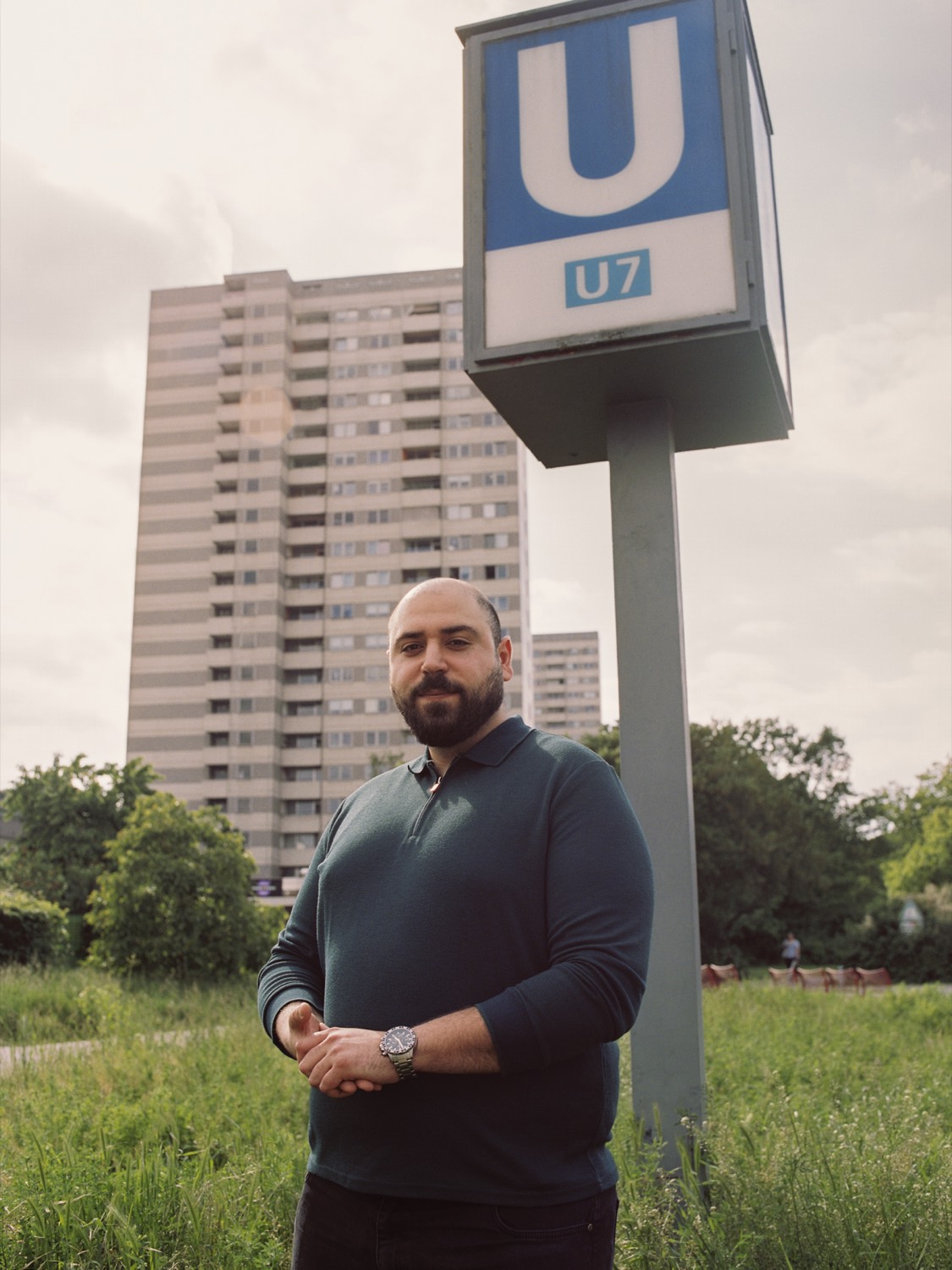
Here in our Kiez
Cuts are not abstract numbers. This is how the austerity policy lands in Gropiusstadt, Buckow and the Blumenviertel — in our Kiez (neighbourhood):
01
Vivantes cut to the bone
The state-owned hospital on the edge of our constituency had to close around 900 beds during the nurses’ strike because there were simply not enough staff. It took weeks of striking before a collective agreement on workload relief was signed. The owner is the state of Berlin — so the Senate is saving money on its own hospital.
02
Twenty years of wet cellars in the Blumenviertel
For more than 20 years groundwater has been pushing up into people’s cellars. Instead of a permanent solution there are only emergency pumps, and their funding was most recently secured just about as far as 2027. Residents even had to take the Senate to court.
03
The red pen hits the poorest hardest
In Gropiusstadt more than one child in three grows up in poverty (37.3%) — the second-highest rate in Neukölln, the borough with the highest child poverty in Berlin. And still the Senate cuts schools, Kitas (nurseries) and youth work.
What we would do differently
Criticism alone is not enough. This is our answer — concrete, and made for our Kiez.
01
Investment instead of cuts
Money where it is needed: in schools, Kitas, youth clubs, care and neighbourhood work — paid for by sharing the load fairly, not on the backs of those who have least.
02
Housing is not a commodity
A real, legally watertight Mietendeckel (rent cap), delivery of the Volksentscheid and more council housebuilding — so that families can stay in Gropiusstadt.
03
Politics you can reach
A regular advice surgery on social and welfare questions, a neighbourhood assembly and a capped salary as an MP: reachable, honest and open to scrutiny — after the election, too.
Seven questions, seven facts the Senate would rather not say too loudly. Have a guess — and see what it really looks like.
Question 1 of 7
The Senate promised to keep the Sozialticket at €9. What price did CDU/SPD then put it up to?
To €27.50 — more than tripled from €9 in a single year. Around 539,000 people on low incomes are affected: pensioners, unemployed people, single parents.
Source: nd-aktuell / budget plan 2026/27
While cycling and public transport were being cut, the new section of the A100 motorway opened in 2025 — the most expensive road in Germany. What did 3.2 kilometres cost?
€721 million for 3.2 kilometres of urban motorway. The next section, demanded by the CDU, has already shot up from €455 million to more than €1 billion — concrete instead of buses and trains.
Source: Tagesspiegel, 2025
The Senate cut culture by €130 million. How big is the entire culture budget, measured against the state budget as a whole?
Only around 2 per cent — the smallest item in the budget. Even scrapping it altogether would barely dent the billion-euro hole. The cuts were made where they achieve the least and destroy the most.
Source: taz / Tagesspiegel, 2024/25
What did the Senate scrap in 2025 at schools in the very poorest Kieze — including here in Neukölln?
The Brennpunktzulage — €300 a month for teachers at schools in the most deprived areas, exactly the incentive that kept staff at the toughest schools. Saving: €3.2 million. The savings are made on those who need the most support.
Source: Tagesspiegel, 2025
The Volksentscheid “Deutsche Wohnen & Co. enteignen” won clearly in 2021 — with 64% in Neukölln. How many flats has the Senate socialised since then?
Not a single one. The “framework law” of 2026 changes no ownership at all and only comes into force after two years. The clear will of the majority is still being ignored today.
Source: Wahlen Berlin / Haufe, 2021–2026
How did the Berlin Rechnungshof (court of audit) judge the award of millions in grants by the CDU-run culture department?
“Manifestly unlawful” — all 13 grant decisions (€2.6 million) should never have been issued in that way. Public money, handed out under political pressure instead of on the merits.
During the worst power cut in decades — more than 100,000 Berliners without electricity — what was Governing Mayor Kai Wegner doing that morning?
He was playing tennis — and claimed afterwards that he had been on the phone since early that morning. Documents from the Senate Chancellery showed that the first official calls came hours later. That is not how you manage a crisis.
Source: ZDF / Berliner Zeitung, January 2026
0 of 7 correct
However many you knew — every one of these numbers is real and documented. And every one of them is a reason why Neukölln voted for change on 20 September — and why the work carries on now.



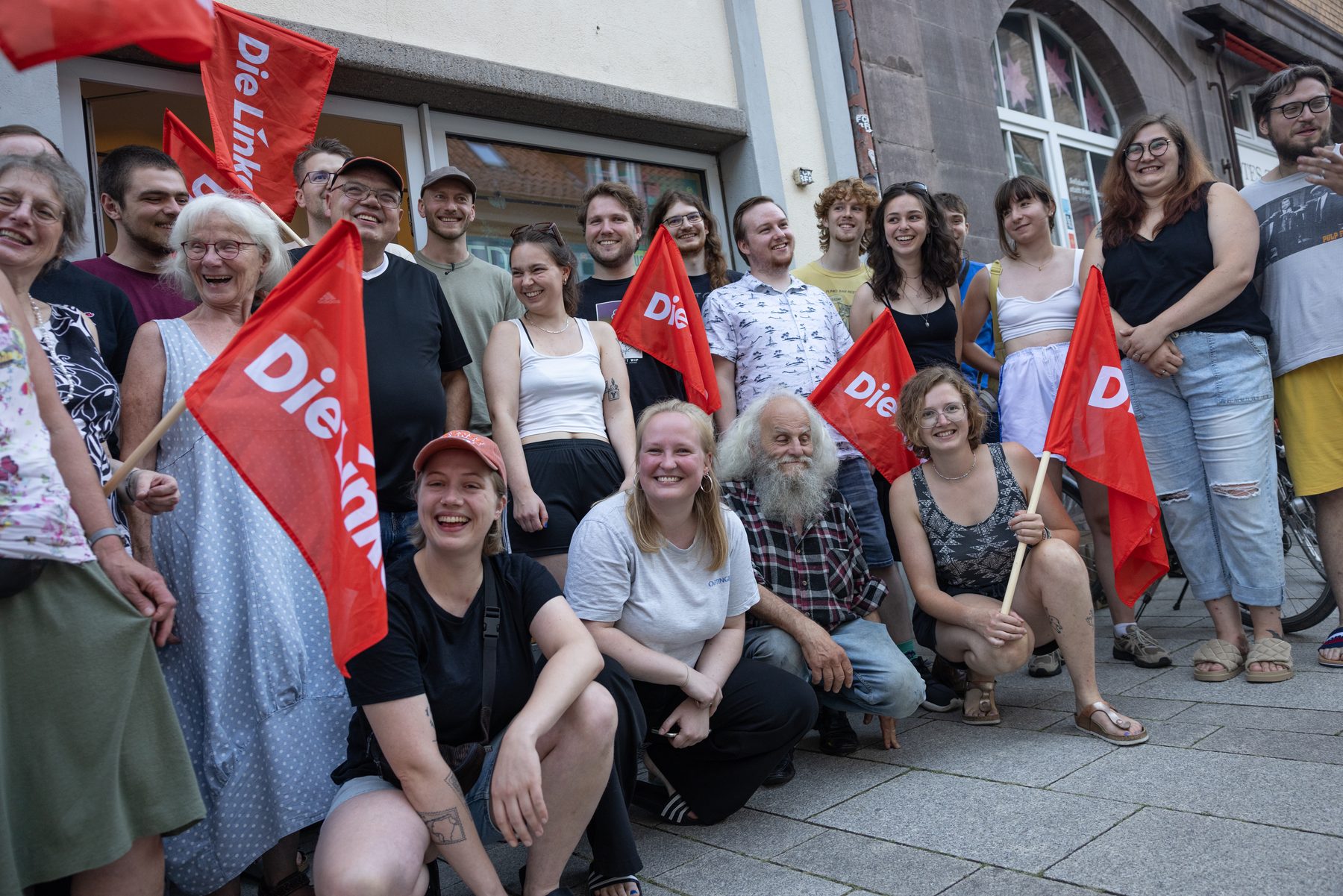
 DIE LINKE Neukölln